PONS FOOTBALL ยท WEEKLY NEWSLETTER โ†’PROPOSE COLLABORATION โ†’

PONS Football Ecosystem

The architecture of the PONS ecosystem

Systemic integration of cognitive performance in the PONS Method.
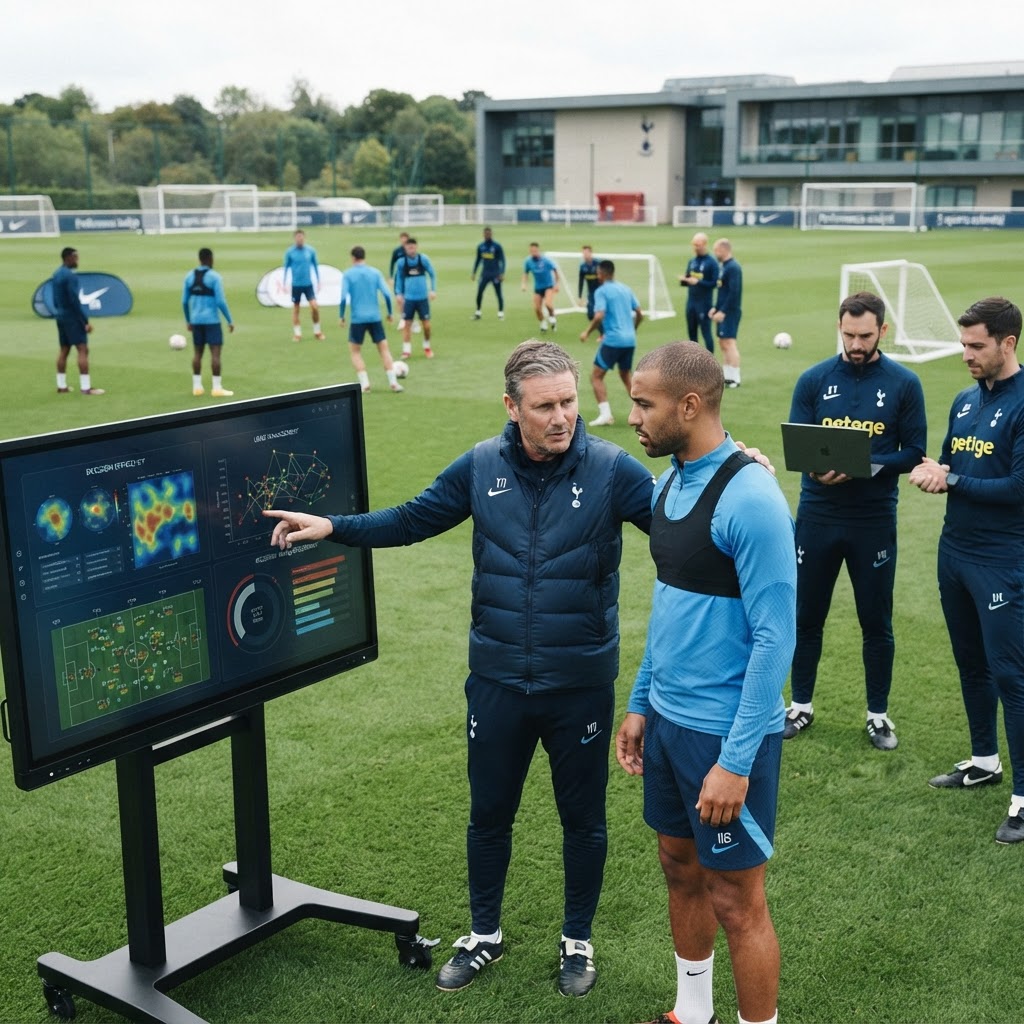
The architecture of the PONS ecosystem
Within the PONS Football ecosystem, this idea connects training, methodology, operational tools, and implementation in clubs within the same path of football intelligence. In elite football, fatigue is rarely purely physiological; most tactical errors in the last fifteen minutes of a match are failures of an overloaded information processing system. If we train decision-making only under conditions of physical freshness, we are preparing our players for a scenario that does not exist. The session architecture must integrate cognitive fatigue as a design variable. The brain, like muscles, has a limited capacity for high-complexity processing. When mental fatigue appears, the player resorts to less efficient automated patterns, losing the ability to read the subtleties of the game. If a technical exercise is performed with a high cognitive load at the end of a session, we force the creation of neural shortcuts that maintain precision under metabolic stress. We must redesign periodization: it is not enough to measure physical load (GPS), we must quantify the density of cognitive stimuli. Coaches must alternate periods of high information demand with autonomous execution tasks under controlled fatigue, forcing the player to manage tactical coherence when mental resources are scarce. The goal is not another isolated product: it is a continuous loop from learning to application, verification, and institutional scale.

Continue learning through the most relevant PONS route

Continue with the relevant PONS learning route

#PonsFootball #Methodology #Performance #PONSMethod #PerformanceArchitecture #FootballMethodology #HighPerformance #FootballCoaching #Football
Enter the PONS ecosystem. In elite football, fatigue is rarely purely physiological; most tactical errors in the last fifteen minutes of a match are, in reality, failures of an overloaded information processing system. The thesis is clear: if we train decision-making only under conditions of physical freshness, we are preparing our players for a scenario that does not exist. The session architecture must integrate cognitive fatigue as a design variable, not as a side effect. Reasoning: The brain, like muscles, has a limited capacity for high-complexity processing. When mental fatigue appears, the player tends to resort to less efficient automated patterns or to simplify decision-making, losing the ability to read the subtleties of the game. If a technical exercise is performed with a high cognitive load at the end of a session, we are forcing the creation of neural shortcuts that maintain precision even under metabolic stress. The practical implication is to redesign periodization: it is not enough to measure physical load (GPS), we must quantify the density of cognitive stimuli within the training block. Coaches must alternate periods of high information demand with autonomous execution tasks under controlled fatigue, forcing the player to manage tactical coherence when mental resources are scarce. The visual concept to illustrate this is a dual mirror graph: a human brain superimposed on a tactical heat map, where neural connections gradually fade toward the edges of the field, while the plotting of passing routes becomes more rigid and linear. This visually represents how cognitive fatigue narrows the player's field of vision, transforming tactical creativity into a predictable mechanical response. Mastery lies in designing environments that challenge this narrowing, allowing team intelligence to prevail over systemic player exhaustion. https://institutometodopons.com | https://football.ponsmethod.com | https://ponsmethod.com