PONS FOOTBALL · WEEKLY NEWSLETTER →PROPOSE COLLABORATION →

PONS Football Ecosystem

PONS Ecosystem: Institutionalizing excellence

PONS Ecosystem: Unifying analysis, methodology, and training into a single architecture.
PONS Ecosystem: Institutionalizing excellence
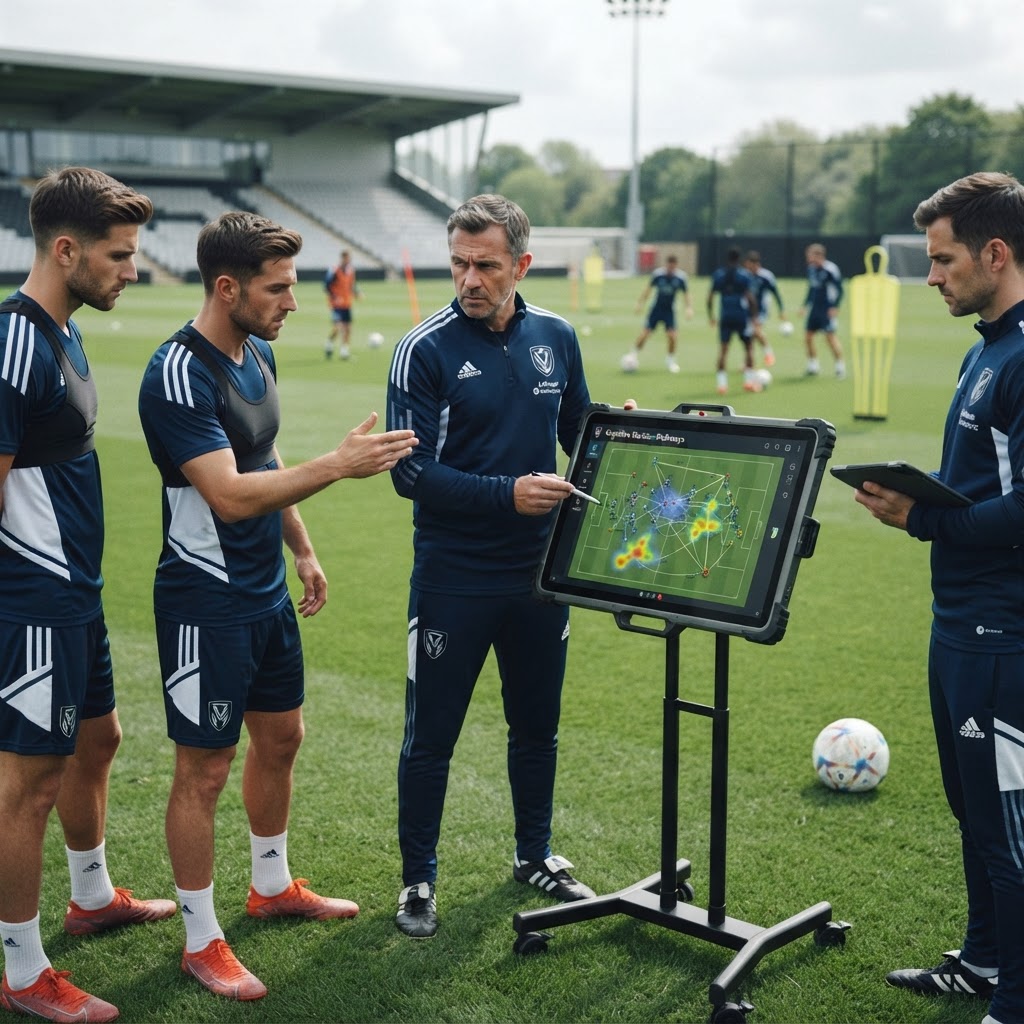
Within the PONS Football ecosystem, this idea connects training, methodology, operational tools, and club implementation within a single path of football intelligence. Competitiveness in elite football does not lie in the accumulation of specialists, but in the quality of the connections that link them. Many clubs operate as isolated silos, where methodology is perceived as a static document rather than a dynamic process. The real competitive advantage arises from designing performance architectures where the transfer of knowledge between the technical staff and the sporting management is continuous, adaptive, and predictive. Football is a game of non-linear variables; training must transcend technical execution to become a training system for collective cognition. It is necessary to institutionalize a common decision-making grammar. By auditing friction points and replacing hierarchical reporting with flows of applied intelligence, the technical structure functions as a unitary organism where communication protocols guarantee the coherence of the project beyond immediate results. The goal is not another isolated product: it is a continuous loop from learning to application, verification, and institutional scale.

Explore David Pons professional profile and collaboration

David Pons Coach

PONS Method Institute · Football PONS Method O.S. · PONS Method

#PONSMethod #EcosistemaFootball #Excellence #DavidPons #FootballCoach #UEFAPro #FootballLeadership #SportingDirector #HighPerformance #Football
Enter the PONS Ecosystem. Competitiveness in elite football does not lie in the accumulation of specialists, but in the quality of the connections that link them. Too many clubs operate as a sum of isolated silos, where methodology is perceived as a static document rather than a dynamic decision-making process. My thesis is clear: the true competitive advantage arises from designing performance architectures where the transfer of knowledge between the technical staff and the sporting management is continuous, adaptive, and, above all, predictive in the face of uncertainty. Football is a game of non-linear variables; therefore, training must transcend technical execution to become a training system for collective cognition. It is not enough to integrate departments; it is necessary to institutionalize a common decision-making grammar that allows the technical structure to function as a unitary organism. For sporting directors and coaches, this implies a paradigm shift: stop managing tasks and start designing decision systems. A practical implementation begins by auditing the friction points where information is lost between areas, replacing hierarchical reporting with flows of applied intelligence that inform field work in real time. Performance architecture is not built with proper names, but with communication protocols that guarantee the coherence of the project beyond immediate results. Visually, this concept is best represented by a dynamic neural network on a pitch, where nodes represent tactical decisions and arcs of light represent data transfer between analysis, physical preparation, and the game model. Only under this logic does institutional resilience cease to be an ideal and become a measurable and scalable operational reality. To delve deeper into this methodology, explore the resources of our network: https://institutometodopons.com | https://football.ponsmethod.com | https://ponsmethod.com